

AI Dubbing Tools: Ecosystem Expands for Global Content Localization
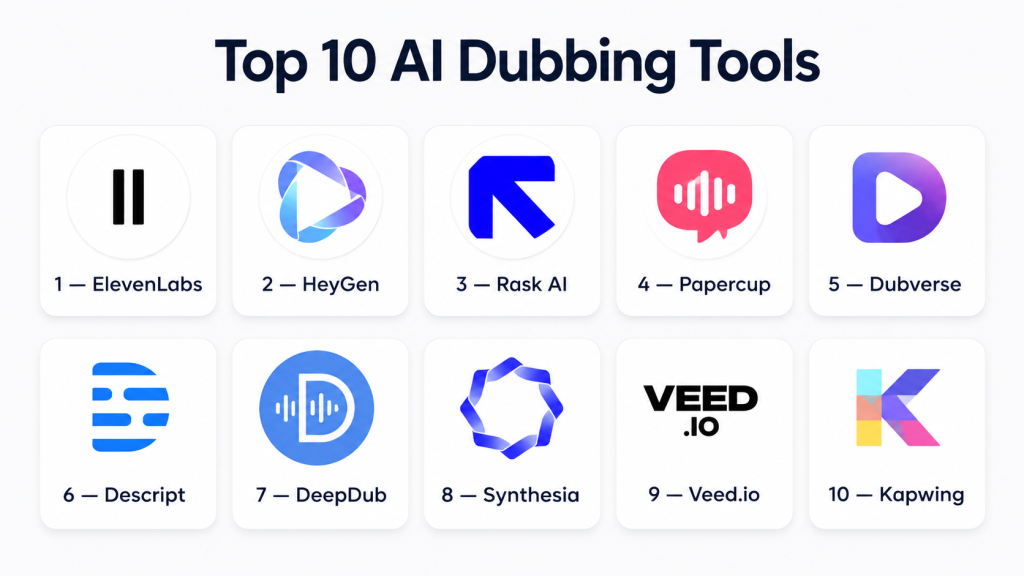
This article compiles a list of the top 10 AI dubbing tools, including ElevenLabs, HeyGen, and Rask AI, detailing their features, pros, and cons. It highlights how these tools automate video translation and re-voicing to enable global content distribution, making multilingual video production faster and more scalable for streaming services and content creators.
Key Takeaways
- AI dubbing tools leverage speech recognition, neural translation, voice cloning, and lip-sync alignment to recreate videos in multiple languages.
- Platforms range from creator-focused solutions like Dubverse and Kapwing to enterprise-grade tools such as Papercup and DeepDub.
- Key evaluation criteria for these tools include voice realism, translation accuracy, lip-sync quality, language support, and scalability.
- Market trends indicate rapid improvements in neural voice cloning, real-time AI dubbing, and emotion-preserving speech synthesis.
- Tools like HeyGen and Synthesia offer avatar-based lip-sync and video generation capabilities.
Why It Matters
The proliferation of AI dubbing tools is directly addressing the streaming industry's need for efficient, scalable content localization. This capability reduces reliance on traditional, expensive human dubbing workflows, accelerating content release cycles for global audiences and enabling wider distribution across OTT platforms. Going forward, watch for continued advancements in real-time dubbing and emotion-aware voice adaptation to further bridge linguistic barriers and enhance viewer engagement.
Read full article at myhospitalnow.com