

Comcast Rolls Out RealTime4K Peacock Channel
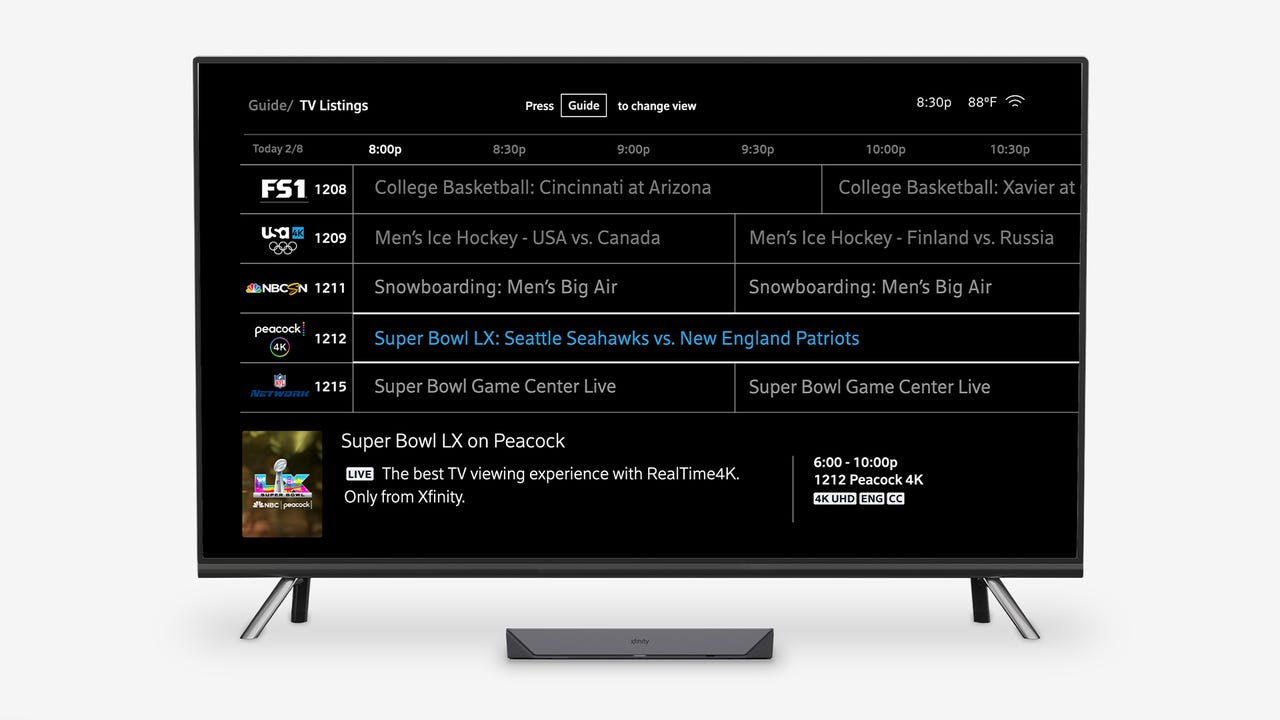
Comcast has launched a Peacock-branded 4K channel for its pay-TV subscribers that delivers live sports and other programming using its newly branded RealTime4K low-latency 4K format. The service uses low-latency DASH and Comcast’s own edge CDN to get latency close to over-the-air broadcasts, supports Dolby Vision and Dolby Atmos at about 30 Mbit/s, and is accessible via select Comcast 4K-capable set-top devices and the Xfinity Stream app without a separate Peacock subscription. Initial content includes NBC’s coverage of Super Bowl LX and select events from the Milan Cortina Olympic Winter Games, though Comcast notes the 4K business impact on subscriber retention and acquisition remains uncertain.
Key Takeaways
- RealTime4K targets near-OTA latency using low-latency DASH plus Comcast’s edge CDN; last year’s enhanced 4K was ~3.5s behind OTA and Comcast says it will shave additional seconds.
- Streams use Dolby Vision and Dolby Atmos at roughly 30 Mbit/s; availability limited to operator-supplied Xi6/XiOne/Xg1v4 devices (EntertainmentOS/X1) and the Xfinity Stream app on 4K displays.
- Comcast positions RealTime4K as a pay-TV differentiator around live sports, but admits the subscriber retention/acquisition impact is still unproven — it’s a technical and experience play, not yet a clear revenue lever.
Why It Matters
Comcast’s RealTime4K launch signals the next phase of operator-led premium streaming: combining low-latency DASH, operator edge CDNs and high-bitrate Dolby Vision/Atmos profiles to approximate OTA timing and deliver a broadcast-grade 4K experience to pay-TV subscribers. For execs, this matters because it’s a defensive play to reinforce linear pay-TV value during flagship live sports, and a testbed for edge-delivered, high-bitrate IP workflows. If Comcast can consistently hit near-OTA latency and manage bandwidth at scale, other operators and rights-holders may follow — pressuring streaming platforms to match latency or accept second-class status in live sports. The commercial question remains: will better pixels drive subscribers or merely satisfy high-end users?
Read full article at lightreading.com