

VCAT Beta 4 Adds VVC Decode — Real-World Battery Benchmarks
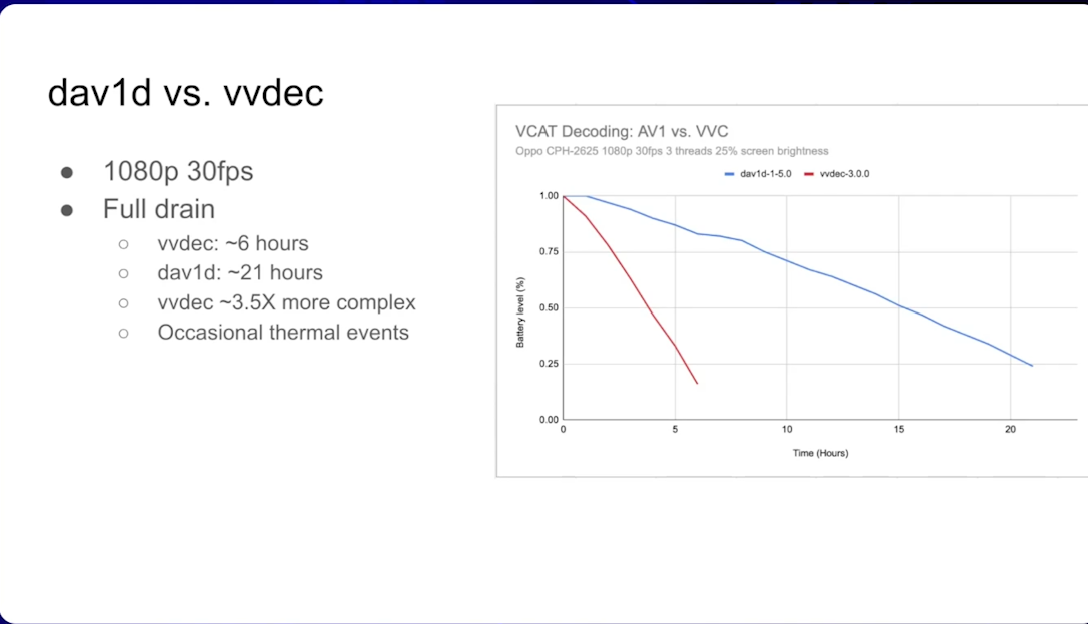
The article summarizes an interview with David Ronca about VCAT Beta 4.0, an open-source video codec benchmarking tool now supporting VVC software decode via Fraunhofer's VVdeC, along with new test vector management features. It details how VCAT is used to characterize software decoding performance on a wide range of Android devices, compares AV1 and VVC battery/thermal behavior, and outlines a roadmap for future encoder, GPU, and AI codec benchmarking capabilities.
Key Takeaways
- VCAT Beta 4 adds Fraunhofer VVdeC support and a test-vector manager for standardized, shareable decode benchmarks.
- On Ronca's device, VVdeC drained ~3x faster than AV1 (Dav1d) and produced occasional thermal events; Fraunhofer says VVdeC isn't yet optimized.
- VCAT emphasizes long-duration battery and thermal testing to expose real-world software-decode limits across low-cost global Android devices.
- Planned encoder, GPU, and AI/NPU benchmarking will make VCAT a decision tool for per-device playback rules, codec selection, and SoC/vendor evaluation.
Why It Matters
VCAT is shifting codec evaluation from short synthetic runs to operational reality: battery drain, thermal events, and sustained playback matter more than headline compression gains. For streaming services, handset vendors, and SoC teams chasing global reach, measurable software-decode profiles determine session length, quality choices, and bundling decisions—especially on $100–$150 Android devices. By open-sourcing shareable test vectors and adding VVC decode, VCAT creates a common yardstick that will pressure decoder vendors and SoC partners to optimize for energy, not just bitrate. Expect these benchmarks to influence per-device playback rules, encoder strategy, and ROI cases for NPU-accelerated or AI codecs.
Read full article at streaminglearningcenter.com