

Topaz Video AI adds first SDR-to-HDR model, Hyperion
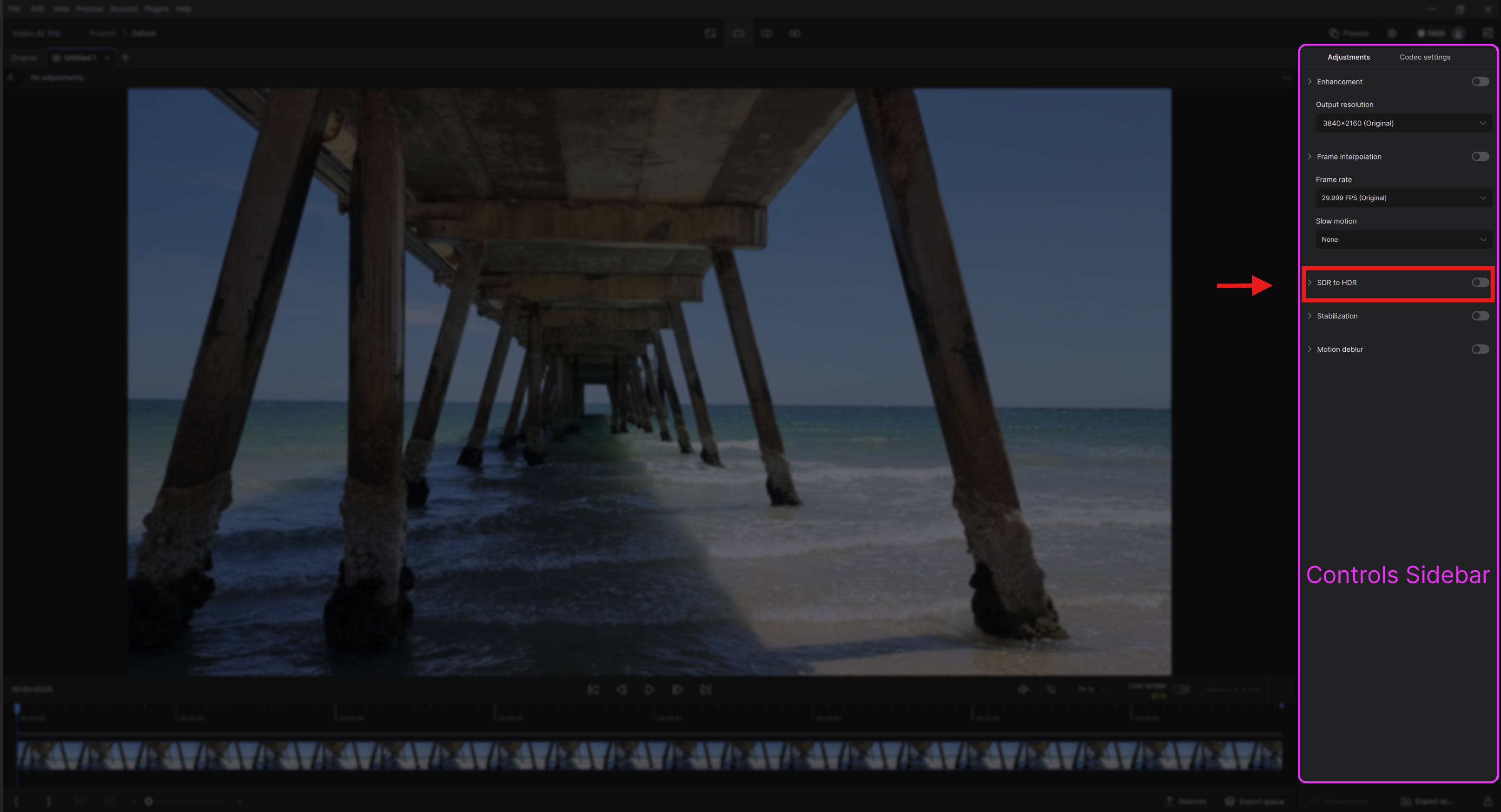
Topaz Labs has introduced Hyperion, its first SDR to HDR AI model within Topaz Video AI, designed to convert standard dynamic range content to high dynamic range. This process involves Inverse Tone Mapping (ITM) to expand color data and convert BT.1886/rec709 SDR to BT.2100/PQ HDR, with adjustable exposure and saturation settings. The model is compatible with various ProRes, H264, H265, AV1, and other codecs, though some codecs have known issues.
Key Takeaways
- Hyperion is Topaz Labs’ first SDR-to-HDR model in Topaz Video AI.
- The model converts BT.1886/rec709 SDR content to BT.2100/PQ HDR using inverse tone mapping, also described as up mapping.
- Users can adjust exposure from 0 to 1, boost saturation from 0 to 1, and tune a highlight threshold between 0.45 and 0.85.
- Topaz says Hyperion works with ProRes 422 variants, H264 High, H265 High/Main/Main10, AV1 10-bit, PNG 16-bit, and QuickTime V210/R210.
- Known issues include flat colors in TIFF, JPEG 8-bit, EXR, and DPX, plus playback problems for FFV1, VP9, and QuickTime Animation in QuickTime Player and Premiere.
Why It Matters
Hyperion gives Topaz Video AI a built-in path from SDR sources to HDR output, but the workflow still depends on source quality, display support, and codec choice. The company explicitly warns that interlaced footage, muddy or blown-out video, and some moving shots can produce surging, blooming, or color shifts. For streaming teams, the practical signal is whether the HDR preview path in Topaz Video AI 5.4 and the Alpha model hold up across common delivery codecs like ProRes, H.265, and AV1 10-bit. Watch for how often users hit the known codec issues list versus successful HDR renders.
Read full article at docs.topazlabs.com