

Red5 bets on MOQ today—and “negative latency” MOCK tomorrow
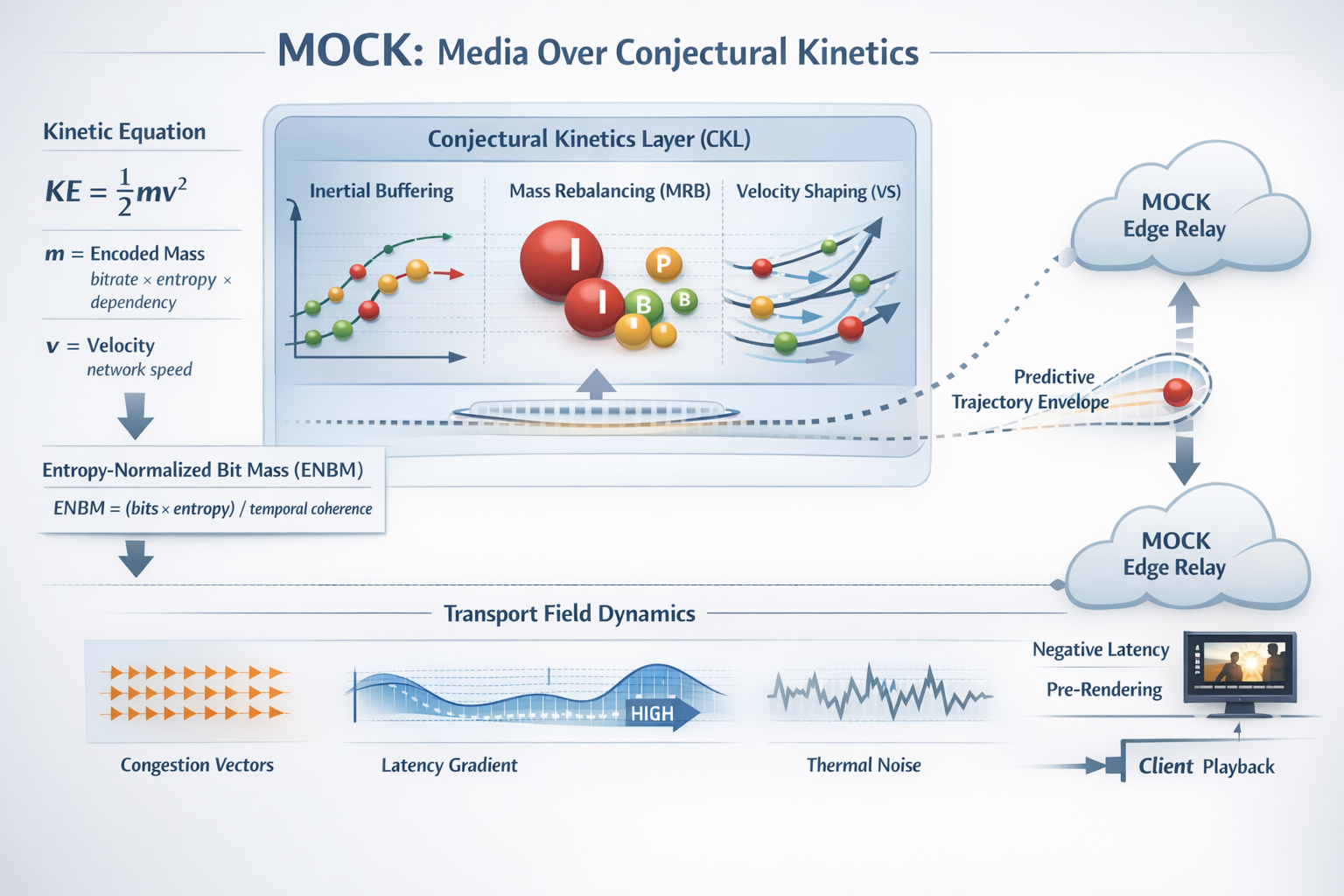
Red5 describes progress on its Media over QUIC (MOQ) implementation and says it plans to go live on Red5 Cloud with globally distributed MOQ relays running on CacheFly. The post also introduces a proposed new live media delivery approach called MOCK (Media Over Conjectural Kinetics), which conceptually models media fragments as "kinetic particles" and uses predictive reconstruction (including GPU-accelerated inference via NVIDIA CUDA) to target extremely low latency and reduced buffering behavior. Red5 says it is exploring how MOCK could integrate alongside existing MOQ and WebRTC workflows and intends to release early research/implementation under an Apache 2 license.
Key Takeaways
- MOQ is moving from implementation work toward deployment on Red5 Cloud, with CacheFly positioned as the relay footprint.
- Red5 introduced MOCK as an experimental transport layer above QUIC that leans on prediction/reconstruction rather than classic buffering/retransmission behaviors.
- The approach explicitly targets ultra-low latency by using GPU-accelerated inference (CUDA) for motion/scene prediction and stream-state reconciliation.
- Red5 says MOCK is intended to coexist with MOQ and WebRTC rather than replace them outright, signaling a hybrid roadmap.
- An Apache 2 release is planned for early research/implementation—inviting external validation (or refutation) from the developer ecosystem.
Why It Matters
MOQ is becoming the serious new on-ramp for scalable low-latency live, and Red5’s “global relays on CacheFly” plan is the practical part of this story: edge distribution, standardized transport, fewer bespoke hacks. MOCK is the meme—and the warning label. The industry is increasingly blending delivery with inference (prediction, reconstruction, perception-aware prioritization) to mask network physics. If vendors can credibly shift from “deliver every packet” to “deliver enough signal + predict the rest,” it could reshape CDN value (GPU at the edge), player architecture, and how we define “latency” in interactive video.
Read full article at hubs.la