

The TV Home Screen Becomes Streaming’s Next Power Center
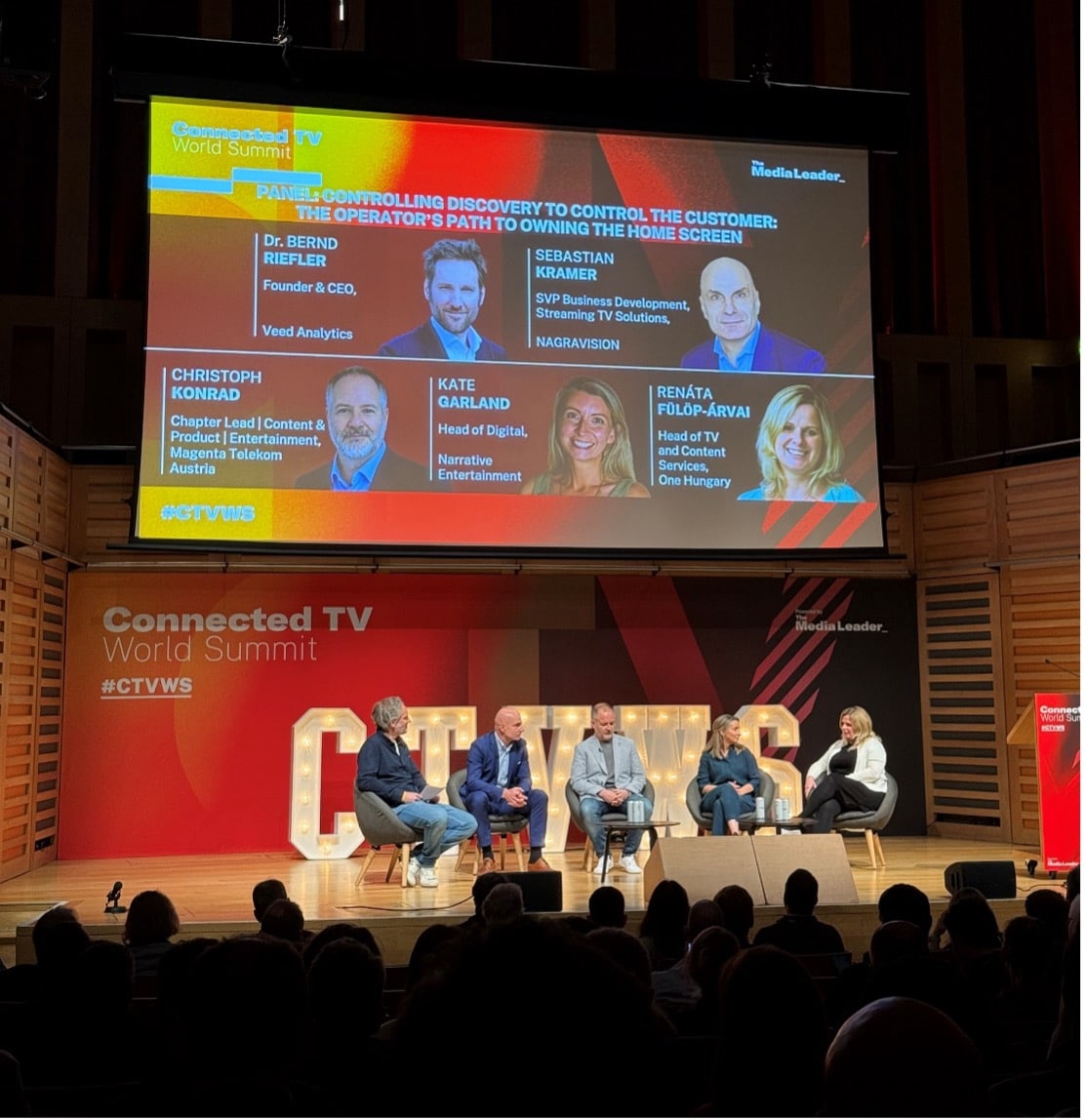
NAGRAVISION recaps discussions from the Connected TV World Summit in London focused on content discovery, AI/LLM-assisted search and recommendations, and competition to control the TV home screen and user interface. Panel participants including Magenta Telekom, One Hungary, and Narrative Entertainment discussed operators’ interest in retaining control of the viewing entry point (often via set-top boxes) and the role of metadata and ecosystem collaboration in improving contextual discovery.
Key Takeaways
- Discovery is shifting from “find a title” to “enter a fandom rabbit hole,” spanning franchises across video, gaming, podcasts, and spin-offs.
- LLM-assisted search can interpret natural-language intent (e.g., “something easy tonight”), but quality outcomes depend on metadata, context, and ecosystem collaboration.
- Operators (e.g., Magenta Telekom, One Hungary) want to avoid becoming “guests” inside smart-TV ecosystems by retaining UI and customer ownership.
- Set-top boxes remain strategically relevant in many markets—Deutsche Telekom cited ~80% of customers still using one—keeping operators in control of the entry point.
- Broadcasters want visibility on the home screen and access to navigation/engagement insights to optimize presentation and contextual journeys.
Why It Matters
Streaming’s new battleground is interface control: whoever owns the home screen owns discovery, merchandising, and increasingly advertising and data rights. AI won’t “solve” discovery by itself—without strong metadata and cross-platform cooperation, LLM experiences will be inconsistent and brand-damaging. For executives, this reframes strategy from content arms races to distribution leverage: negotiate for UI placement, data access, and integration standards. The emerging meme: “The home screen is the new carriage deal”—and set-top boxes, far from dead, are still a meaningful lever for operators defending the viewer relationship.
Read full article at nagra.vision