

Netflix Cassandra Splitter Reduces Wide Partition Latencies by Seconds
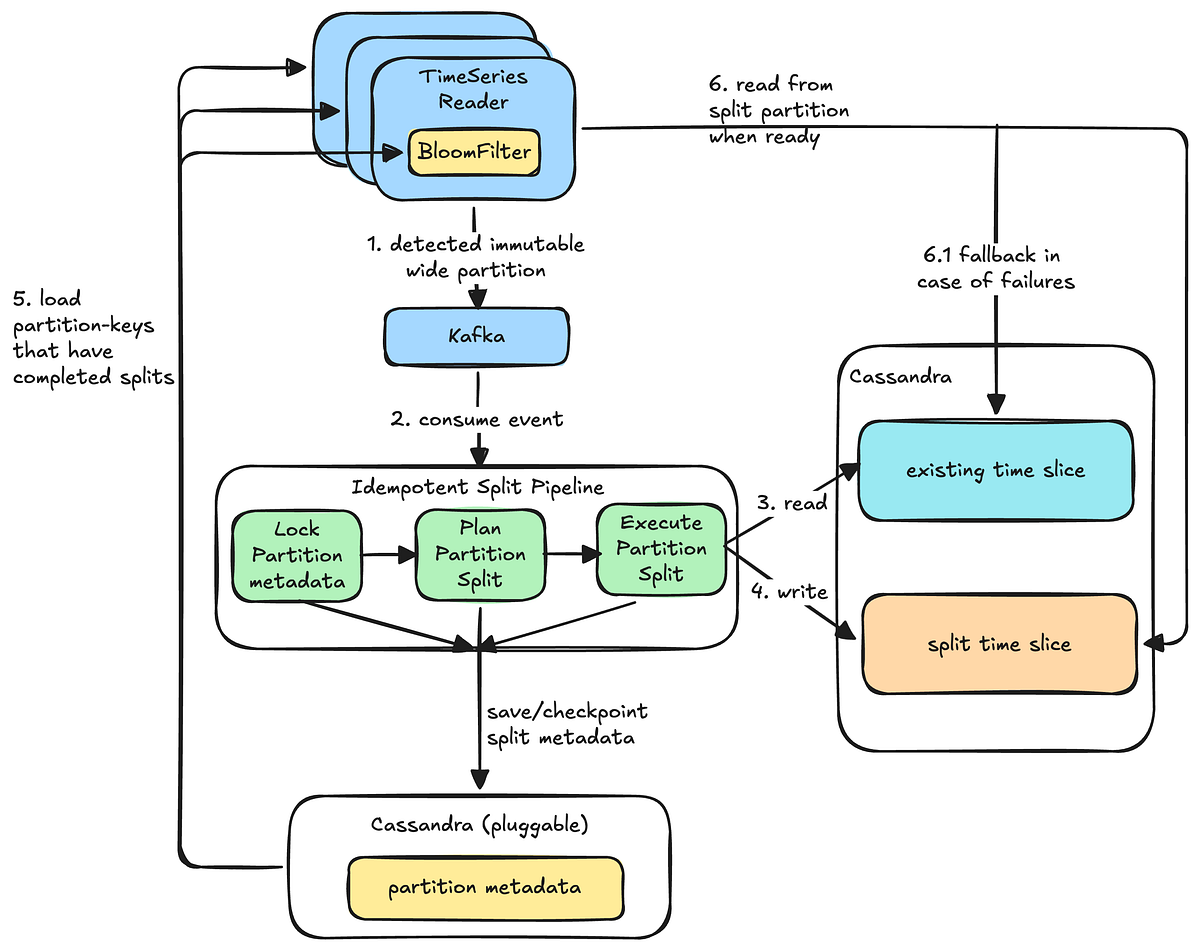
Netflix has developed an asynchronous pipeline that dynamically detects and splits wide partitions in Apache Cassandra, specifically for its TimeSeries abstraction. This system aims to reduce tail latencies from seconds to approximately 200ms when ingesting and querying petabyte-scale temporal event data. The solution involves both table-level re-partitioning and dynamic per-ID partitioning, significantly improving the efficiency and reliability of large-scale data operations.
Key Takeaways
- Netflix's solution tackles 'wide partitions' in Cassandra 4.x, a key challenge for its TimeSeries Abstraction handling petabytes of event data.
- The system employs two strategies: 'Time Slice Re-Partitioning' for entire tables and 'Dynamic Partitioning per ID' for individual wide TimeSeries IDs.
- Dynamic partitioning detects wide partitions during read operations, plans splits asynchronously, and re-routes queries transparently via in-memory Bloom filters.
- Tail latencies for wide partitions improved from several seconds down to around 200ms, with average latency dropping to low double-digit milliseconds.
- This allows services to paginate and query over 500MB+ partitions, resolving constant timeouts and improving availability for extreme cases.
Why It Matters
Netflix's engineering solution directly addresses a core challenge in managing large-scale, high-throughput time-series data using Apache Cassandra: wide partitions. By dynamically splitting these wide partitions, Netflix sustains low-latency data access even as data volumes scale to petabytes. This technical advancement could influence how other streaming platforms and large data consumers optimize their own Cassandra-based time-series architectures. The operational safety and performance gains demonstrated set a new bar for managing data at extreme scales, suggesting that similar dynamic strategies might become standard. Watch for further technical blogs on splitting mutable partitions, indicating the next frontier for this type of data optimization.
Read full article at netflixtechblog.com