

Netflix Keeps Winning by Shipping the Streaming Playbook
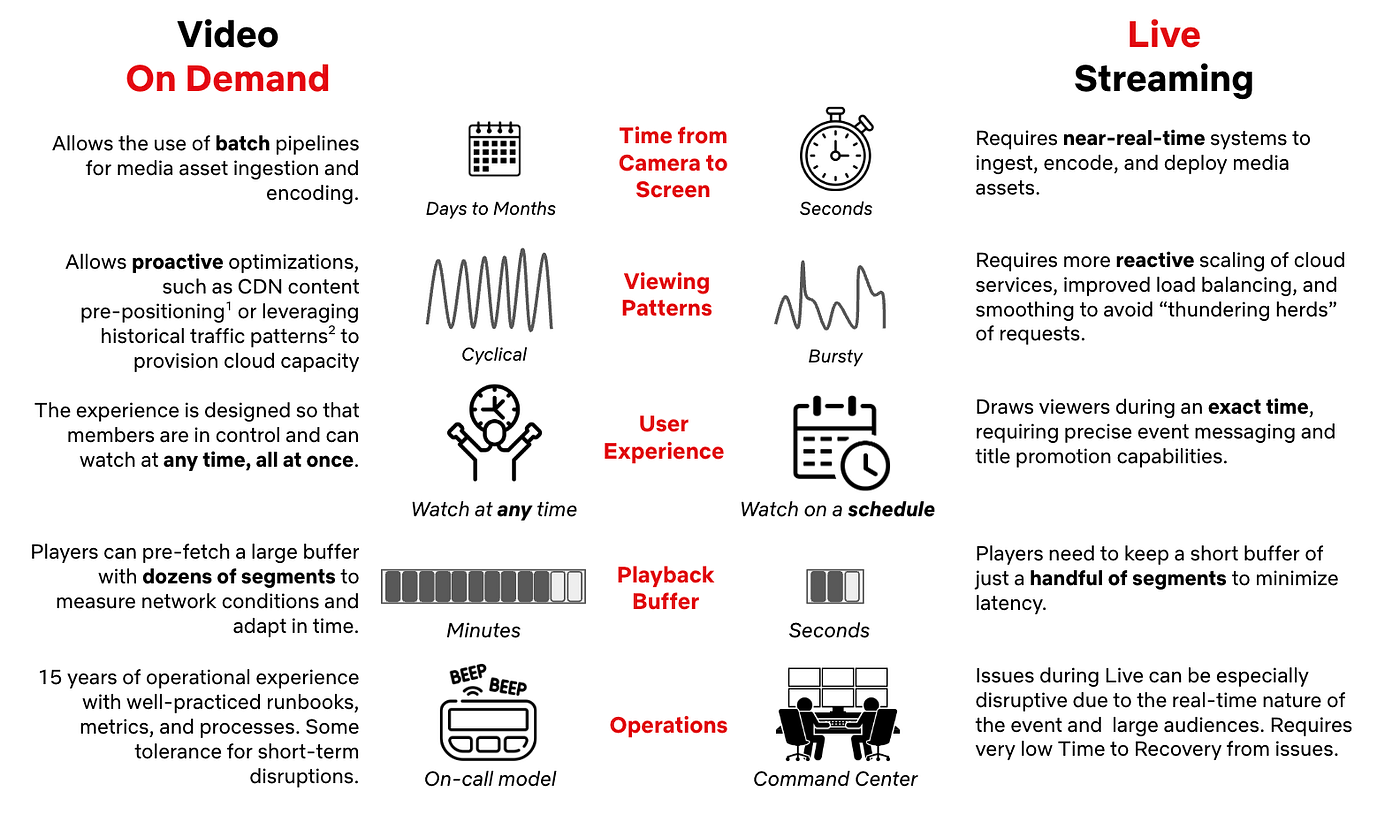
The article discusses Netflix’s engineering approach to operating streaming services at scale, framed around its broader technical contributions to the streaming ecosystem. It references Netflix innovations including per-title encoding, the VMAF quality metric, and its development and promotion of the AV1 codec, while contrasting Netflix’s technical posture with Amazon.
Key Takeaways
- Netflix’s per-title encoding approach optimizes bitrate ladders content-by-content, improving quality-per-bit at global scale.
- VMAF remains a key Netflix contribution: a practical quality metric that helps align encoding decisions with viewer-perceived outcomes.
- Netflix’s active development and promotion of AV1 reinforces its strategy of lowering delivery cost while maintaining quality across devices.
- The broader story: Netflix repeatedly turns internal scaling problems into external standards, tools, and industry momentum.
Why It Matters
Netflix’s durable advantage isn’t just content—it’s compounding engineering leverage. Per-title encoding and VMAF create a measurable, repeatable quality pipeline; AV1 pushes a cost/quality curve that benefits anyone delivering video at scale (while pressuring laggards on device support and encode capacity). The meme here is “platformization via publishing”: Netflix earns ecosystem gravity by operationalizing best practices and nudging the market toward its preferred primitives. For executives, that translates into real capex/opex decisions—codec roadmaps, metric alignment, and tooling choices—whether you’re competing with Netflix or building on the same rails.
Read full article at streaminglearningcenter.com