

Live encoding’s new control knob: measurable quality, not bitrate
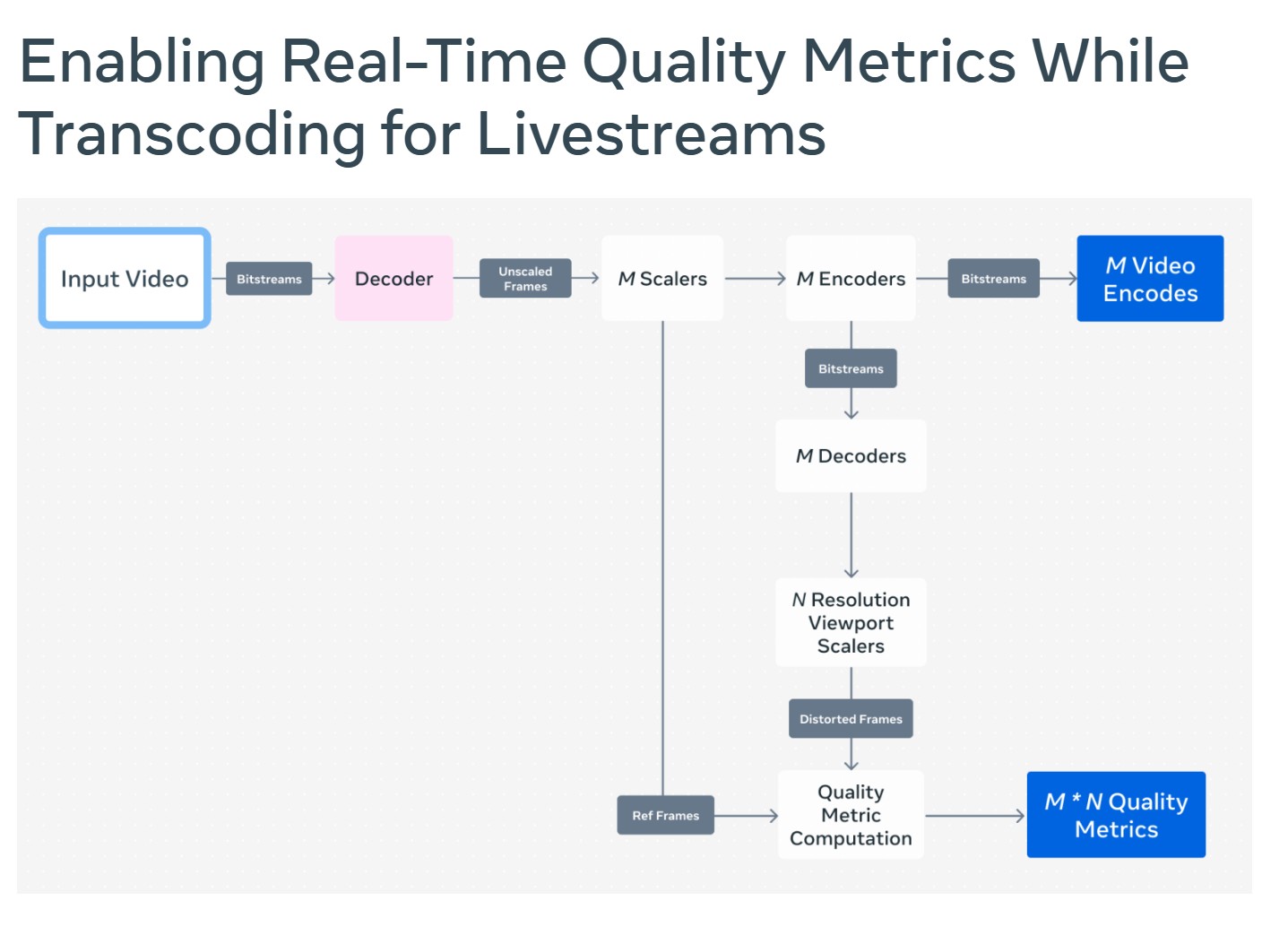
The article describes an industry shift in live video encoding from bitrate-targeted control (CBR/VBR) to quality-targeted modes (e.g., capped CRF, AWS Elemental QVBR, Harmonic EyeQ) and toward explicit perceptual metrics computed during encoding. It highlights vendor approaches that use real-time VMAF-class metrics for monitoring and, in some cases, closed-loop rate control—citing Synamedia’s pVMAF integrated into QC-VBR and MainConcept’s VMAF-E designed to run inside the rate control loop—while noting Meta’s upstream FFmpeg work enables real-time metrics computation without publicly claiming metric-driven rate control. The piece also references Ateme’s VMAF-tuned/validated positioning and a reported Netflix deployment of Ateme TITAN Live for live streaming workflows.
Key Takeaways
- Expect a new RFP baseline: encoders should expose a named, independently verifiable perceptual metric (VMAF or documented proxy), not just a proprietary “quality level.”
- Differentiate “in-line monitoring” from “in-loop control”: computing VMAF during encode is useful; using it to steer bitrate frame-by-frame is the strategic leap.
- Synamedia and MainConcept are the clearest public examples of VMAF-class metrics feeding rate control; AWS QVBR and Harmonic EyeQ remain quality-first but largely black-box.
- Meta’s upstream FFmpeg changes lower the barrier for real-time quality telemetry at scale, setting the stage for broader ecosystem adoption.
- Operational upside: per-channel quality targeting becomes realistic (premium vs. long-tail) with a common metric that can be audited across vendors.
Why It Matters
This is the next battleground in live video: not codec wars, but who owns the quality signal. When “quality” is a proprietary knob, vendor comparisons are fuzzy and guarantees are marketing. When quality is a named metric (VMAF-class) computed in real time—and especially when it drives rate control—you get auditable SLAs, smarter bitrate allocation across channel tiers, and faster root-cause analysis when QoE dips. The meme to watch: bitrate becomes a constraint, while perceptual score becomes the objective function. That shift will reshape encoder selection, monitoring stacks, and even how platforms price delivery efficiency.
Read full article at streaminglearningcenter.com