

CloudFront’s quiet power move: CDN + SaaS-friendly multi-tenancy
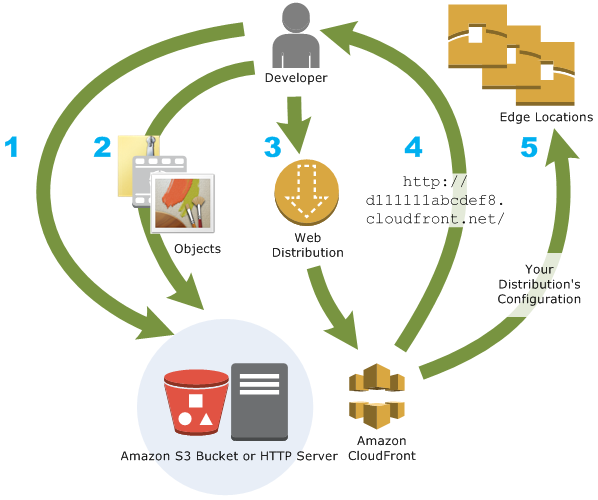
AWS documentation describes Amazon CloudFront as a global CDN that accelerates delivery of static and dynamic content via edge locations, retrieving uncached objects from defined origins. It outlines core configuration concepts such as CloudFront distributions, origin options (including Amazon S3 and AWS Elemental MediaPackage), caching/expiration controls, and a choice between standard distributions and multi-tenant distributions for SaaS use cases. The page also summarizes CloudFront’s usage-based pricing model centered on data transfer out and request volume, with origin-to-CloudFront transfer free when using AWS origins.
Key Takeaways
- CloudFront delivers cached objects from edge POPs; cache misses are retrieved from an origin you configure (S3, MediaPackage, EC2/custom HTTP, etc.).
- You choose between standard distributions (one app/site, bespoke settings) and multi-tenant distributions designed for SaaS providers managing many similar tenants.
- Caching and expiration are first-class levers: default edge TTL is 24 hours, but can be tuned down to 0 seconds as needed.
- CloudFront pricing centers on data transfer out to viewers and request counts; origin-to-CloudFront transfer is free when the origin is on AWS (e.g., S3, ELB, API Gateway).
Why It Matters
In streaming, “CDN strategy” is increasingly an org design problem as much as a network problem. CloudFront’s explicit push for multi-tenant distributions is a tell: AWS wants SaaS video platforms to standardize delivery policies (TLS, logging, caching, security) once, then stamp them across customers without an explosion of per-tenant ops overhead. Combine that with free origin-to-CloudFront transfer for AWS origins, and the platform gravity gets stronger—architectures that keep packagers/origins inside AWS can simplify cost modeling while shifting the real battleground to egress optimization, request efficiency, and cacheability.
Read full article at docs.aws.amazon.com