

Channel Factory pushes political advertisers to prioritize contextual resonance over reach
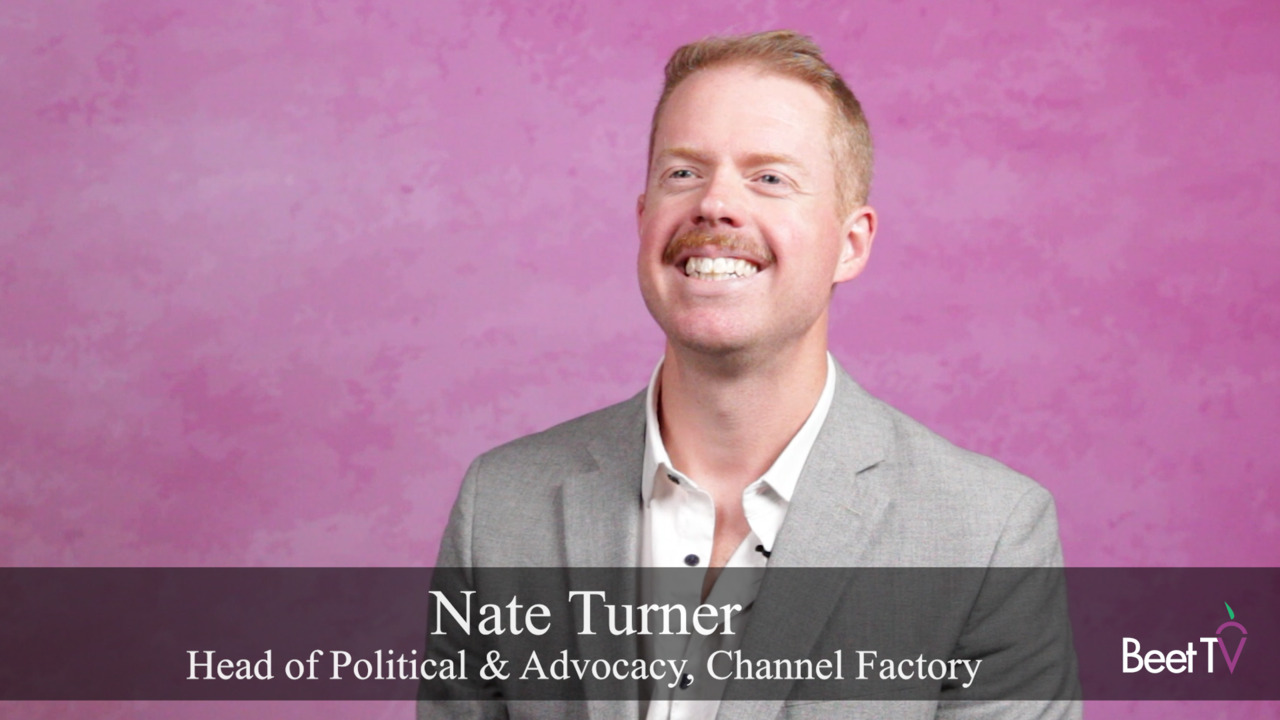
Channel Factory's Nate Turner argues that political advertisers need to move beyond simple impression counts and prioritize contextual ad placement. He emphasizes the importance of measuring contextual resonance, attention quality, and persuasion lift to amplify ad messages rather than just avoiding unsuitable content. Turner believes that better ad adjacency will lead to more effective campaigns and better-informed voters.
Key Takeaways
- Contextual resonance assesses whether the content environment strengthens or weakens a campaign's specific policy message
- Three priority metrics for political buys include contextual resonance, attention quality, and persuasion lift by environment
- Campaigns often achieve technical 'viewability' without tracking if the context actually allows the message to land with voters
- Persuasion lift measurement tracks how voter recall and favorability vary specifically across different content categories
Why It Matters
This shift suggests a move away from crude brand safety—simply avoiding 'bad' content—toward a proactive 'brand suitability' model tailored for political influence. As streaming platforms capture a larger share of political spend, the ability to prove that an ad appeared next to relevant news versus irrelevant entertainment becomes a competitive differentiator for ad tech vendors. The market is moving from valuing raw volume to valuing the psychological receptivity of the viewer. Watch for whether major DSPs integrate these specific 'persuasion lift' metrics into their standard political reporting dashboards by the 2026 midterms.
Additional Context
The push for contextual rigor comes as political ad spending on connected TV (CTV) and digital video continues to break records. Per eMarketer in June 2024, CTV was projected to be the fastest-growing political ad channel, with spending expected to reach $1.56 billion for the 2024 cycle. This influx of capital has forced a reckoning regarding waste; according to a May 2026 report from AdImpact, roughly 15% of digital political spend is often lost to non-relevant content or low-attention environments, leading more agencies to seek specialized verification partners like Channel Factory or Integral Ad Science. Simultaneously, platforms are tightening their own transparency requirements. In early 2026, YouTube updated its disclosure policies to provide clearer labeling for AI-generated political content, which has added a layer of complexity to contextual targeting. Per a Wall Street Journal report from April 2026, advertisers are increasingly wary of 'made-for-advertising' (MFA) sites that offer high impressions but zero contextual value, a problem exacerbated by the rapid proliferation of low-quality political news aggregators. This environment has made the 'better neighbors' argument a practical necessity for campaigns trying to maintain credibility in a fragmented media landscape.
Read full article at beet.tv