

Multi-camera XR workflows expose the real broadcast stack
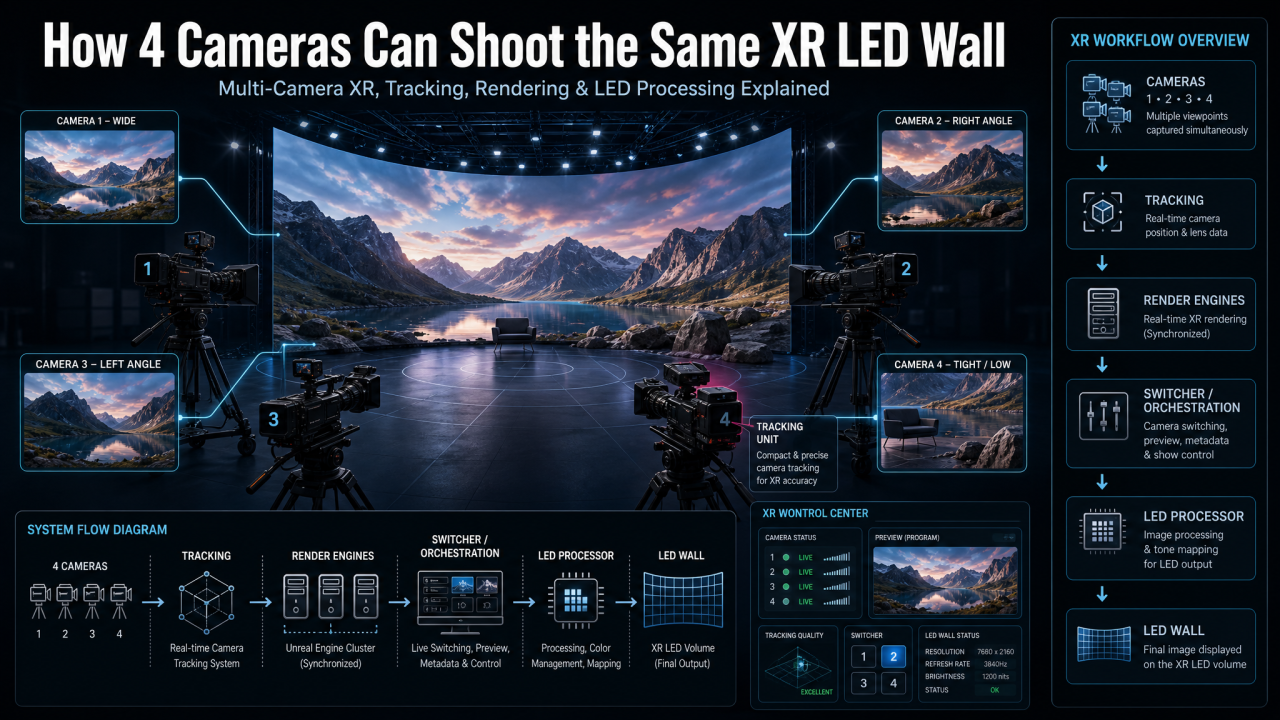
This article discusses the technical stack required for multi-camera XR virtual production, focusing on the challenges and workflows involved when multiple cameras shoot the same LED volume. It identifies key components like LED panels, processing, tracking, rendering, switching, and color as areas of potential misunderstanding in building XR studios and broadcast systems.
Key Takeaways
- The article centers on 4-camera XR production, not a single tracked camera.
- Some workflows let multiple cameras shoot the same LED volume while seeing different backgrounds.
- The stack called out includes LED panels, processing, tracking, rendering, switching, and colour.
- Named technologies and vendors include Unreal Engine, Brompton, Sony, Samsung, ARRI, disguise, ZeroDensity, MoSys, and stYpe.
Why It Matters
Multi-camera XR is being presented as a systems problem, not just a camera or LED-wall problem. The article’s main point is that the practical stack spans panels, processing, tracking, rendering, switching, and colour, and that some workflows do not even show every camera the same background. That puts studio design and broadcast integration at the center of XR deployment decisions, alongside tools from companies such as Brompton, disguise, ZeroDensity, MoSys, and stYpe. What to watch: which approach gains traction over the next three years, frame-interleaving workflows or switcher-driven multi-camera virtual production.
Read full article at linkedin.com