

LiveU deploys bonded cellular tech for massive 2026 North American soccer tournament
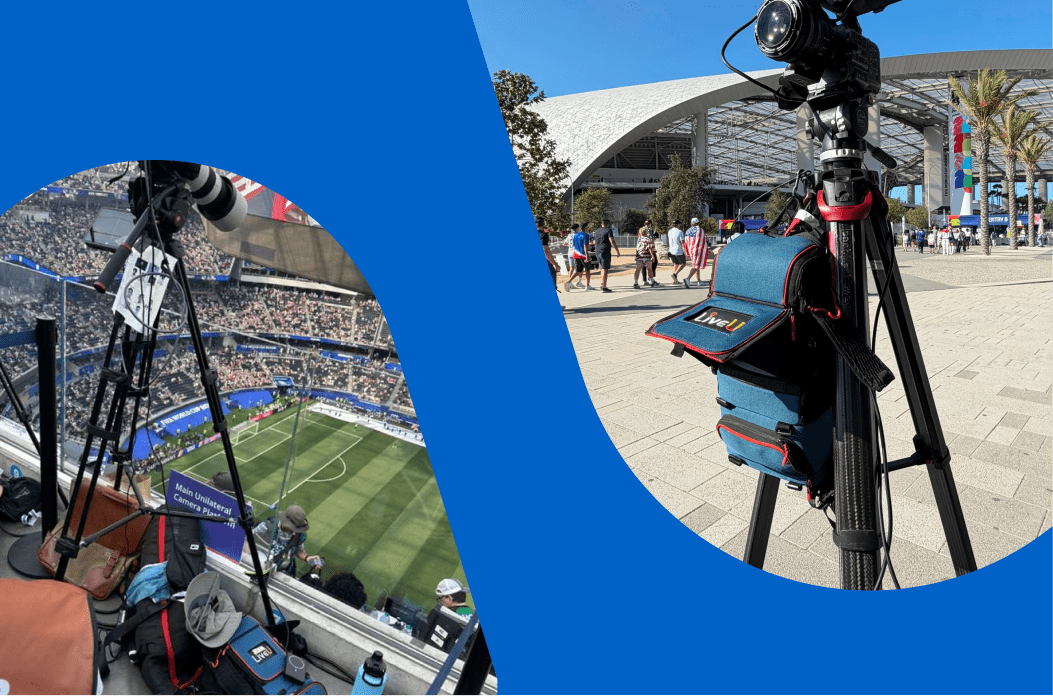
LiveU is providing its live video technology for a major global soccer tournament across North America, enabling broadcasts and enhancing multi-agency public safety communications through bonded cellular technology. The company's solutions, including LiveU IQ and LiveU Reliable Transport, are highlighted for maintaining stable, low-latency video feeds even in congested network environments. This deployment showcases LiveU's role in real-time communication for both media and public safety at large-scale multi-venue events.
Key Takeaways
- Deployment spans 16 host cities across the U.S., Canada, and Mexico to support a 48-team tournament.
- LiveU IQ technology uses AI to switch between cellular carriers in real time to maintain the best available connection.
- LiveU Central provides a single command-and-control interface for both broadcasters and over 100 public safety agencies.
- Bonded technology integrates cellular, Wi-Fi, and satellite into a resilient link capable of bypassing local network congestion.
- System supports live video from drones, helicopters, and unmanned vehicles for real-time situational awareness.
Why It Matters
The convergence of broadcast and public safety on a single IP video platform signals a transition toward unified high-bandwidth infrastructure at large-scale events. For media strategists, this highlights how AI-managed cellular bonding has moved from a backup option to a primary contribution method capable of outperforming local network saturated by thousands of attendees. The partnership with over 100 government agencies underscores the growing reliance on commercial IP video standards for mission-critical operations traditionally reserved for private radio. Watch for the performance metrics of the LU900Q units during the knockout stages in high-capacity venues like Dallas and Los Angeles to gauge the limits of current bonding protocols.
Additional Context
The 2026 FIFA World Cup represents the largest production challenge in the tournament's history, expanding from 32 to 48 teams and increasing the match count to 104. This scale has pushed broadcasters toward decentralized, IP-based production workflows to manage 39 days of competition across three time zones. Per LiveU reporting from June 2026, the company's recent deployment at the Winter Games in Italy served as a proof of concept for this summer, where 980 units delivered 15,000 hours of live broadcast and achieved 36% higher bitrates in congested areas through the use of the LiveU IQ (LIQ) predictive congestion management system. Simultaneously, the public safety sector is undergoing a parallel shift toward broadband-enabled situational awareness. According to FirstNet Authority updates in early 2026, multi-agency coordination for the 2026 tournament is heavily focused on real-time information sharing through unified platforms. This mirrors broader trends seen at major North American events, such as the St. Thomas Carnival and large collegiate sports seasons, where agencies have integrated live body-cam and drone feeds via 5G and LTE. Per The Broadcast Bridge in June 2026, the shift to AI-driven network selection is now considered essential for maintaining public trust and operational readiness during national special security events where traditional land mobile radio (LMR) systems lacks sufficient data throughput for high-resolution video monitoring.
Read full article at liveu.tv