

OREI launches DXA-HD-TX HDMI audio encoder built on Dante Ultimo platform
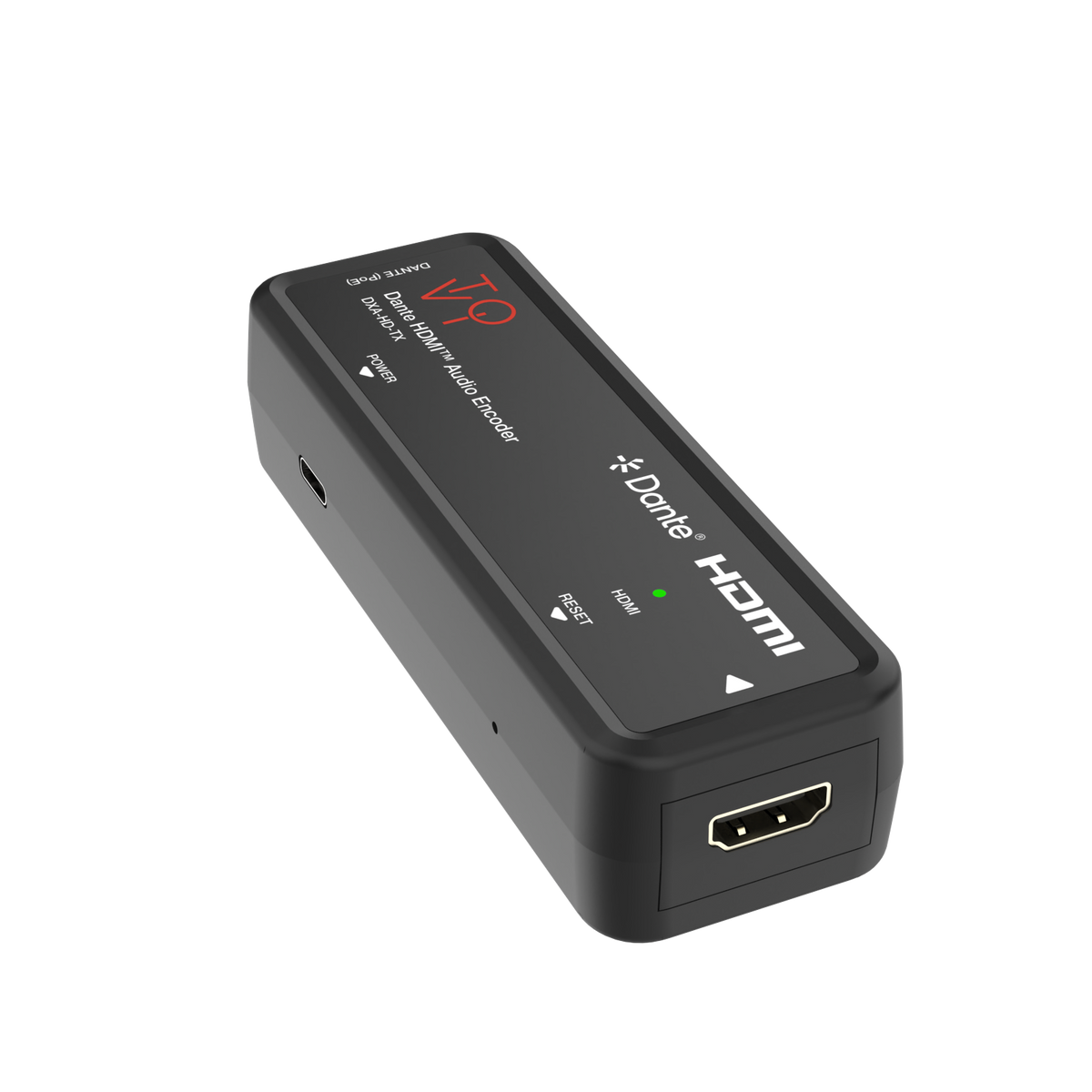
Orei.com has introduced the ToVi DXA-HD-TX, an HDMI audio encoder designed to integrate two-channel HDMI audio sources into Dante networked audio systems. The device supports AES67 compatibility, configurable latency, and flexible power options including USB-C or PoE. It is suitable for applications such as recording studios, live events, concerts, and broadcast environments.
Key Takeaways
- Converts HDMI PCM 2CH audio (32kHz to 192kHz) into Dante digital output at up to 96kHz with 24-bit depth.
- Integrated AES67 compatibility allows interoperability with non-Dante standards-based AoIP networks.
- User-selectable latency settings of 1ms, 2ms, or 5ms via the Dante Controller software.
- Supports dual power delivery methods through IEEE 802.3af PoE or 5V USB-C input.
Why It Matters
The DXA-HD-TX addresses a specific friction point in converged IP production by bridging consumer-facing HDMI sources with professional audio networks without requiring bulky AV receivers. By using the Dante Ultimo 2x2 platform, OREI provides a low-cost entry point for engineers to integrate media players or cameras into established Dante ecosystems. This launch aligns with the industry's broader shift toward AVoIP 2.0, where interoperability via AES67 and scalable IP-based routing is replacing traditional matrix switching. Watch for further adoption of similar ultra-compact decoders as broadcast environments move toward native ST 2110 and Dante-integrated workflows.
Additional Context
The launch of the ToVi DXA-HD-TX coincides with a period of significant expansion for the Dante ecosystem, which celebrated its 20th anniversary in early 2026. Per Audinate and Futuresource Consulting in April 2026, Audio-over-IP (AoIP) has reached a critical inflection point, with 67% of surveyed industry professionals currently using IP networks for audio delivery and another 18% planning adoption within three years. This shift is driving demand for hardware that bridges legacy digital interfaces like HDMI with uncompressed PCM network transport. Competitors are also targeting this bridging requirement to simplify immersive and multi-channel workflows. In June 2026, Apantac demonstrated its DA-HDTV-Dante-Tx-UHD at InfoComm, which decodes compressed HDMI bitstreams—including Dolby Atmos and DTS:X—into discrete Dante channels. While the OREI ToVi model focuses on high-fidelity 2-channel PCM for streamlined setups, the broader market is moving toward portable devices that can replace expensive AV receivers at 1/5 of the cost, according to Apantac management in June 2026. Additionally, the professional AV market is seeing a pivot toward software-managed infrastructure. In January 2026, ADTECHNO launched the DAV Control Nexus, allowing for PC-free routing and management of Dante devices via a web browser. As of February 2026, Audinate reported that over 500 OEMs now have Dante products in the market, with 200 more in development. This rapid scaling of the hardware ecosystem highlights a shift toward decentralized, network-native production tools that prioritize remote management and zero-trust security frameworks over proprietary physical patching.
Read full article at orei.com